
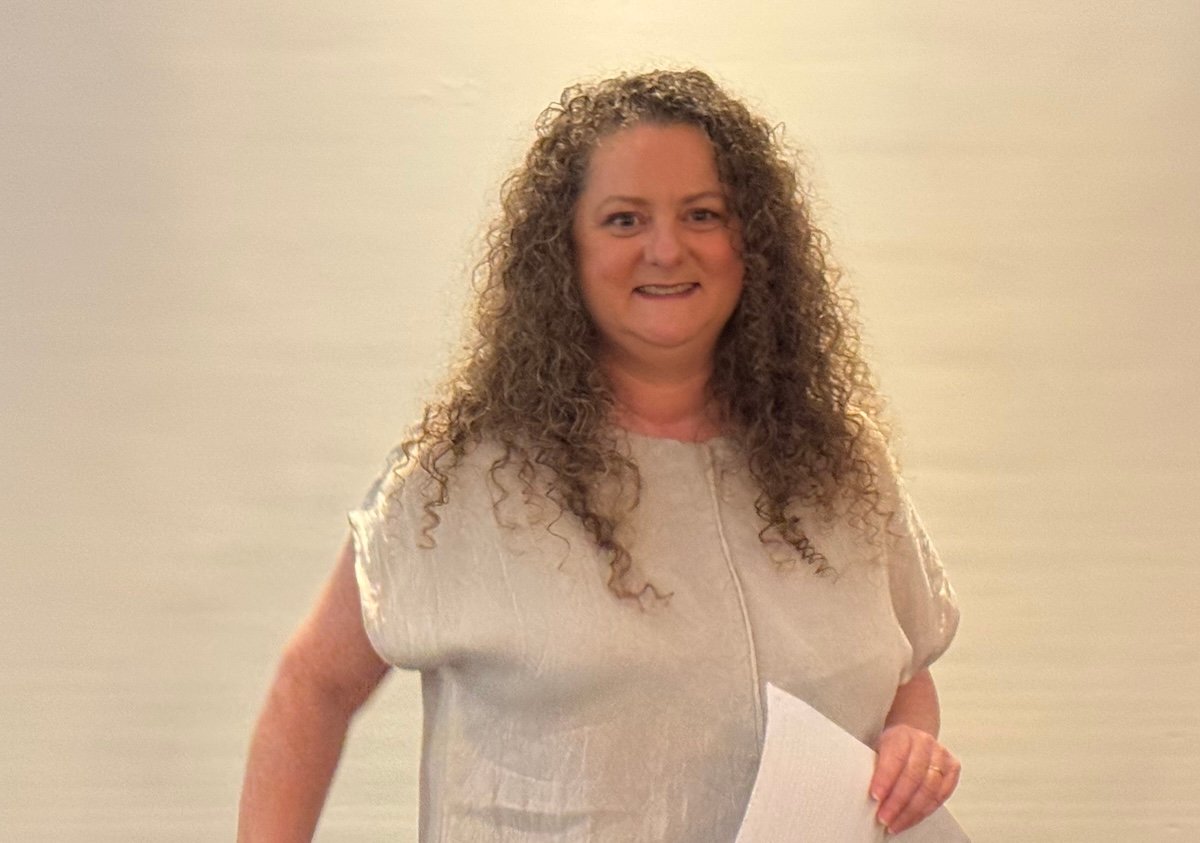
At our latest Business Networking South Leicestershire meeting, Zoë Roddis of ZHR Marketing delivered a highly practical 10-minute presentation looking at something particularly relevant to everyone in the room – how to get more from business networking.
With the memorable title “How to Teach Your Grandmother to Suck Eggs”, Zoë acknowledged that she was talking to a room full of experienced networkers. However, her presentation demonstrated that even those of us who regularly attend networking meetings can probably do more to make those relationships work for us.
Zoë’s key message was simple: networking shouldn’t begin when you walk into the meeting and end when you leave.
Effective networking has three distinct stages – before, during and after the meeting – and putting a little more thought into each can make a significant difference to the results you achieve.
Find out more about Zoë and ZHR Marketing:
Who is Zoë Roddis?
Zoë runs ZHR Marketing, predominantly helping small businesses get to grips with the fundamentals behind their marketing.
Her approach starts with understanding what a business is actually trying to achieve, identifying its ideal clients, clearly explaining what it does and ensuring its pricing allows the business to achieve its goals.
She also helps small businesses make better use of three particularly accessible marketing tools: email marketing, social media and networking.
Zoë describes her approach as practical, focusing on making marketing easier, clearer and more achievable for small and microbusiness owners.
And, as she pointed out during her introduction, she is apparently the only “Zoë Roddis” on LinkedIn – something her parents are rather proud of!
Why Do You Network?
Zoë started by asking members a deceptively simple question:
Why do you network?
Getting more customers and generating new business are obvious answers, but Zoë explained that good networking can achieve considerably more.
It can help us build relationships, meet potential collaborators, find suppliers, discover useful experts, make introductions and create opportunities for other people.
One of BNSL’s strengths is that members already place considerable emphasis on building relationships. After all, people are far more likely to recommend and do business with people they know, like and trust.
Zoë’s presentation looked at how we can take that principle even further.
Before the Networking Meeting
The first stage is preparation.
Most regular networkers prepare their 60-second introduction and remember where and when the meeting is taking place – but Zoë suggested going further.
Before attending a networking event, consider:
-
Who else is going?
-
Who would you particularly like to meet?
-
Have you met any of the attendees previously?
-
What do you actually want to achieve from this particular meeting?
-
Is there somebody you would like an introduction to?
-
Could you arrange one-to-one meetings in advance?
-
Is there a particular service, product or opportunity you want other attendees to know about?
Zoë also suggested using social media before the event. Posting that you are attending and tagging people you already know can generate engagement before you even arrive.
Rather than simply thinking, “I’m going networking”, give yourself a more specific objective.
That might be meeting three people you haven’t spoken to before, reconnecting with somebody, arranging two one-to-ones or finding someone with a particular area of expertise.
Prepare Your Ask
Another important point was to think carefully about what you want other people in the room to do for you.
Your “ask” should not necessarily be confined to your 60-second pitch.
If members understand precisely the type of customer, contact or introduction you are looking for, they have a much better chance of recognising an opportunity when one arises.
Being specific makes it considerably easier for your network to help you.
During the Meeting – Make Yourself Memorable
Once the meeting starts, the focus changes to learning about other people.
Zoë recommended collecting business cards or contact details, connecting on social media and, importantly, paying attention to what other people are saying.
She also made a very simple but valuable point: say your name and business name slowly and clearly.
Regular networkers can easily assume everyone knows who they are and what they do. New visitors often don’t.
Even existing members may understand broadly what somebody does without knowing enough detail to recognise a good referral opportunity.
Repetition matters.
Your 60 Seconds Needs to Be Clear
Zoë encouraged members to use their 60 seconds to explain both:
What you do
and
Who you want to work with.
Avoid assuming everybody already understands your business simply because you have explained it before.
The clearer and more specific you are, the easier it becomes for somebody else to recognise your ideal customer.
Take Notes
Networking meetings can involve conversations with a lot of people in a relatively short period.
A few days later, remembering exactly who said what can become surprisingly difficult.
Zoë recommended making brief notes about the people you meet, including what you discussed, what they are looking for and anybody you might be able to introduce them to.
Those notes become particularly valuable during the next stage – following up.
Get a Selfie!
Zoë also encouraged members to take photographs with the people they meet.
It might sound like a small thing, but a simple photograph can create several useful opportunities.
It gives both people content to share, allows you to tag one another on social media, introduces each person to the other’s audience and provides a natural reason to engage after the meeting.
Most importantly, it demonstrates that you have actually met and started building a genuine real-world relationship.
Just remember to ask before taking or publishing the photograph!
The Meeting Is Over – But the Networking Isn’t
This was perhaps the most important message of Zoë’s presentation.
Leaving the venue should not mean the networking stops.
Afterwards, think about everyone you met and consider what the relationship could become.
Could they be a client, supplier, referrer, collaborator, introducer, supporter or useful expert?
Or perhaps they are simply somebody you enjoyed meeting and would like to know better.
There does not always need to be an immediate commercial outcome.
Follow Up Properly
Zoë suggested several practical follow-up actions:
-
Connect on social media.
-
Engage with their posts.
-
Congratulate them on achievements.
-
Recommend them when appropriate.
-
Tag them when you see a relevant opportunity.
-
Send a personalised email demonstrating that you actually listened.
-
Think about how you could help them.
-
Arrange a one-to-one meeting.
-
Invite them to another networking event.
-
Send something useful relating to your conversation.
-
Make an introduction where appropriate.
-
Most importantly, do what you said you would do.
That final point is particularly important.
If you promise to send somebody information, make an introduction or arrange something, following through helps establish trust.
Identify Your Three Key People
Zoë provided everyone with a useful Making Your Networking Count worksheet to help turn the presentation into action.
One section asks attendees to identify the three key people from a meeting with whom they particularly want to develop a relationship – and, importantly, why.
Another asks:
Who can I introduce to someone I met today?
This shifts networking away from simply asking, “What can I get from this room?” towards thinking about how you can create value for other people.
That is often where the strongest long-term networking relationships begin.
Measure Whether Your Networking Is Working
Zoë finished by raising an interesting question: what is your networking actually costing you, and what are you getting back?
Membership fees are only part of the cost.
There is also travel and, perhaps most importantly, your time.
Relationships do not develop overnight, so Zoë suggested reviewing networking activity over periods such as three, six and twelve months.
Look for patterns.
Which groups and meetings are producing useful relationships, introductions, opportunities and ultimately business?
A networking event may technically be free to attend, but if it consistently consumes time without producing any meaningful benefit, it isn’t really free.
Equally, return on investment does not have to mean an immediate sale. Knowledge, introductions, suppliers, collaboration and trusted professional relationships can all have considerable value.
Know, Like and Trust
Ultimately, everything Zoë discussed came back to three familiar words:
Know. Like. Trust.
Effective networking is about establishing and developing relationships with people over time.
The meeting itself simply creates the opportunity.
What you do before, during and particularly after that meeting determines how much value develops from it.
Zoë’s presentation was an excellent reminder that networking is not about collecting the greatest number of business cards. It is about developing meaningful relationships and then doing something with them.
Need Help Making Your Marketing Work Harder?
If you run a small or microbusiness and would like a clearer, more practical approach to your marketing, Zoë can help you understand your customers, sharpen your message and make better use of marketing activities including email, social media and networking.
Find out more:
Come Along to BNSL
Of course, the best way to put Zoë’s networking advice into practice is to do some networking!
If you run a business in South Leicestershire or the surrounding area, why not come along to BNSL as a guest?
We’re a friendly and relaxed group focused on building genuine, long-term business relationships, with only one member representing each profession.
Contact the BNSL Committee to arrange a visit:
Contact Business Networking South Leicestershire
Local. Supportive. Affordable. Real.
— The BNSL Committee

